
becoming consistent with clarity
creating alignment from beliefs to thoughts to actions

offering an end of year 1:1 guided planning workshop called Aligned Life Audit to bring clarity and confidence to people ready to make moves in 2026. to discuss if it’s a good fit, book a free consultation here.

when we are “not consistent” or “not disciplined”, we often blame ourselves for a lack of will, our inability to “do the damn thing”. we seek conducive structures like gym passes, courses, and cookbooks, but somehow still have issues showing up.
first of all, congrats on investing in yourself.
the issue isn’t your will, though. will is often ascribed as the cause of a lack of discipline: we don’t want to do it, we skip because the effort isn’t worth giving up the comfort, or we’re not in the right environment or mood…
will is important but vision also has to be there to give direction.
how do you generate vision?
by designing your system of beliefs about who you are and where you’re going.
a system of belief is your underlying knowing, your internal code, that guides how you view yourself, the world, and how you show up.
deep down, there are beliefs blocking you from thinking and behaving in alignment with your goal. this incongruence or contradiction is called cognitive dissonance. when our thoughts and actions are not aligned, we experience confusion, stress, and wasted energy.

having state-of-the-art tools does not automatically make you “do the thing”. this is what creatives call GAS, gear acquisition syndrome. imagine wanting to be a professional photographer, then buying a high-end camera. if deep down you believe the effort is not worth it, and that it’s a waste of time and money… would you actually do what it takes to be a professional?
it is in the doing that you become. but how do you repeatedly do?
this is where the athletes (aka professionals) come in. athletes experience doubt, too, but they act towards their goals anyway, instead of acting only from emotion. they sit in that limbo area between two identities until the evidence of the desired state becomes greater than the evidence of the past state. after the consistency in showing up is set, they can move on to other forms of consistency, like performance, to create predictable results on cue.
start at the core
a writing and review process that can help:
what beliefs do you have about this area of change?
do they align with who you’re aiming to be?
what beliefs can I exchange for this limiting belief?
then keep these new beliefs somewhere you can refer back to every time you’re in disbelief.
review on cadence (daily, weekly,
monthly) to recognize what old patterns still exist then gradually choose differently to replace them with the new ones.
change from the core
belief is the mother of thoughts and the grandmother of action. to get into a flow of aligned action, it’s efficient to start at the identity-based beliefs, or any self-concept that follows “I am”.
I am lazy. Then what’s the point of taking action?
I am stupid. Then what’s the point of learning?
I am not athletic. Then why learn how to prevent injuries? I’m inherently a klutz.
our self-concept influences what thoughts and options follow, then which actions we take.
let’s flip it.
I am proactive. Then what’s the point of waiting when I can start now?
I am a learner. Then why staying mediocre when I can learn to improve?
I am invested in my health. Then what can I do to take care of myself regularly?
with each decision, we choose what is consistent with who we believe we are. by choosing more aligned beliefs, we create consistency in the stories we tell ourselves, stories worthy of inspiration and change. this internal consistency extends to what we think and do.

(there’s also the definition of consistency that gets people. I used to think I had to do exactly the same thing every day to be consistent. this was impractical when urgent life events took priority. I felt discouraged on those dates because it felt like I fell off the train and failed at my goal, even though I did 20% of the task. I measured my progress as 0-sum: only 100% counted as great. this created lag in getting back into action when inevitable change came.
consistency is better measured as yes/no to “did you show up?” and on longer timelines rather than day-to-day. the aggregate of the week or month matters more than having perfection every day.
example:
Monday: 100%
Tuesday: 100%
Wednesday: 50%
Thursday: 10%
Friday: 1%
Saturday: 80%
Sunday: 60%
this is still a great week because you are making progress. over time, you can optimize for performance (getting closer to 100% when you desire) but phase 1 of consistency is showing up, making progress, not perfection.)
consistency in showing up is less about hitting the same target a day, and more about acting in alignment with who we aspire to be and reinforcing that into who we believe we are. this creates the internal conditions to desire to show up and a self-trust that reminds you that you are reliable to act on your dreams. this momentum allows you to next enter a different realm of consistency: consistent performance.
The champions do not train until they get something right. They train until they can’t get it wrong. — John Gronski
additional reading that can help: this article on the qualities of consistency i’m digesting by John Gronski.
big love,
YUNNY
End of year offer: Aligned Life Audit
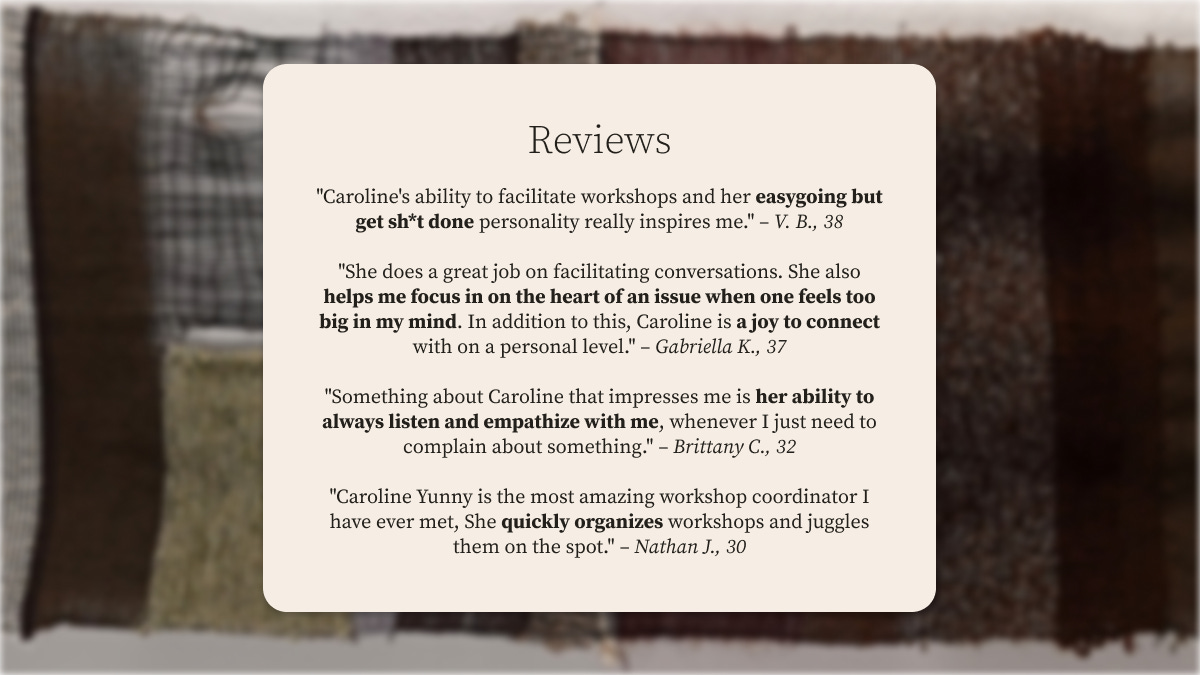
I’m sharing a limited offer just for Substack readers called Aligned Life Audit, a 1:1 guided planning session to clear the old and reset intentions before the new year.
this is for people who want to step into 2026 with clarity and confidence, have a clear vision and plan to make progress from day one, and would love a listening guide to help them organize their thoughts into structure.
we will explore your vision, review your life, and create a plan that supports your transformation.
to discuss if it’s a good fit or not, book a free consultation here.
this is an extended experience part of the Renewal collection.