

How do we suffer less?
Issue 38: Lessons on surrender, acceptance, discipline, and emotional security

Suffering is human-made. It is inflicted internally through our psychological neuroses and externally through conflict. Everyone has traits that they are ashamed of and try to hide, but what if that’s the root of our chaos?
Suffering arises from resistance. When something clashes with our expectation, we psychologically push it away. This resistance prolongs pain, extending our discomfort far beyond what is necessary. Over time, this spirals into deeper psychological states like loneliness, anxiety, and depression.
Monks follow a series of practices to attain enlightenment. Since their path focuses on relieving suffering, their methods can guide us toward reducing negative mental states to experience more freedom—and, in turn, more peace, joy, love, and energy.
At times, our mind deceives us, distorting reality to affirm our egoistic needs and identity. For example, when we watch movies with others, our opinions can differ based on personal desires, values, and perceptions.
These past couple months of sabbatical have given me the space to see my mind for what it is—its vulnerabilities, impulses, and distortions, which have all served a purpose in my life. I wouldn’t be as accomplished if my anxiety, fear, and competitiveness hadn’t driven me to work so hard in the past ten years. But as I look ahead at where I want to grow and the experiences I want to have in the next decade, I no longer see a need for these old patterns.
Naturally, my mind evolved. I’ve found myself learning these concepts, which have led me to a state of neutrality. I feel compelled to find purpose and devote myself to work that pushes our society forward… and I trust that will come. For now, let me recount the lessons that have brought me to this peace today.
What if you let go?
I grew up learning that life is about hard work, that success comes to those who push themselves to their limits. At this stage in life, this belief hurts me more than it motivates me. I’m no longer interested in internal conflict, because I built confidence in my abilities.
This confidence came from letting go—surrendering to my limitations.
I was not the best technically; following minute directions didn’t work for me. I was not the best emotionally; I was highly sensitive to people’s words, which led to outbursts and reinforced my people-pleasing guilt. I was not the best at focusing on one thing; my fear of boredom fueled my overwhelm and self-defeat when I couldn’t perform. The unrealistic standards and expectations I placed on myself created a boom-and-bust emotional cycle, leading to monthly breakdowns. It wasn’t sustainable—but I did it to achieve.
When you acknowledge your weaknesses, it feels terrible—like skipping coffee for a week or picking up exercise after months of inactivity. The reason is, your emotional habit isn’t being fed. But you have a choice: continue clinging to an emotional pattern that no longer serves you, or let it go.
Change takes time, and your body will resist it. But when we dare to let go, we give ourselves the opportunity to choose a healthier path of growth.
What if we accepted ourselves and what life brings?
This is where the good stuff happens. Surrender is about ego death—a shedding of the self. Your ego is fed, inflated, and protected by your ingrained patterns.
So what happens when you stop feeding them?
In this gap, you have a choice. You can fill the void with something else—possibly another neurotic tendency. When I first tried to rest, I treated it like work. I made lists of movies to watch and chose movies that would “expand my perspective”—essentially disguising my fear of failure as productive rest. Ha! I tricked myself.
I learned that accepting my weaknesses allowed me to move forward, breaking the cycle of overcompensating for what I wanted to hide.
Acceptance means allowing yourself to feel—observing your emotions and letting them run their course. It means self-compassion, recognizing that your flaws are part of you, shaped by past experiences. It means acknowledging that you were once a child, and now you have the power to parent yourself the way you wish you had been parented.
You may notice that when you fully allow yourself to feel pain, its intensity fades— sometimes even disappears. Do this enough times, and your relationship with pain will change. You will be kinder and more supportive of yourself, reducing internal discord and creating space to imagine the person you can become.

Can you become emotionally undisturbed?
To be emotionally undisturbed is to remain steady no matter what happens.
Something shat on your car? No problem—I love the car wash.
Someone slighted you and passed you up for promotion? No problem—I know I’m making progress, so I’ll find another path to my goals.
Someone cursed you on the freeway? No problem—they’re having a bad day. I hope they find their peace.
This is difficult—until it’s not. Like anything else, it’s about habit formation. Training takes time, and choosing to make healthier thought patterns requires devotion.
What helped me transition was reframing self-work as self-devotion. I once believed I sucked at discipline, that maybe I just wasn’t meant to grow this way. Then I hit my lowest point—a depressive state that made it painfully clear that something had to change.
Discipline is simply remembering what you’re working towards and making progress. I no longer see it as a militant act, as I once did when I consumed a lot of masculine self improvement content. Discipline can be soft.
If you can’t give 100% today—say, an hour-long workout—what can you do that’s energetically within your means? 80%? 50%? 1%? Maybe just 20 squats. Discipline is about compounding those small efforts over time, rather than demanding perfection in every moment.
When we shift from chasing perfection to embracing consistency, progress becomes internally defined rather than reliant on external outcomes. This fosters confidence and emotional security.

What now?
Now, it’s about practicing these concepts until they become joyful. And they can be.
I’m ready to align with purpose, still navigating what that looks like. Developing my skills and capacity for peace, joy, love, and energy has been a necessary step towards the business and life I want to create. Prioritizing wellness allows me to support my loved ones, stay strong through challenges, and enjoy the journey.
What do you think? Did anything resonate with you? I want to keep sharing my lessons and connecting with like-minded people.
Take care.
Love,
YUNNY
Inspiration lately
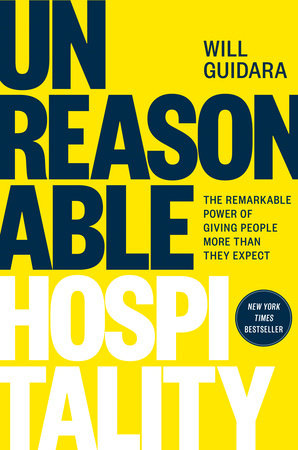
Unreasonable Hospitality by Will Guidara (Restauranteur of Eleven Madison Park) is showing me what I value, and has guided me in managing teams, shaping visions, and shifting culture towards service. As someone who loves food and dining, reading about how experiential details elevates these moments has transformed how I see my work.
Roger Martin, former dean of the management school at University of Toronto, taught me that strategy is entirely different from a plan. I had difficulty teasing the two because they’re often used interchangeably—but they’re not the same. Strategy is your theory of how you’ll win, while a plan is simply a to-do list of actions. I wish I had known this when running vision and strategy workshops, but it’s never too late to adjust my approach.
I’m exploring where the studio fits within the experiential industry, specifically in the Immersive Wellness category. This industry is still evolving and taking shape in real time—like at this panel at SXSW featuring a Meow Wolf co-founder. (Corvas, for example, is creating an immersive bathhouse in Austin)! Visiting Meow Wolf in Colorado inspired me to pursue immersive art and grow the studio.